15 Best Places to Visit in Jaipur (Plus a 2-Day Plan)
The best places to visit in Jaipur, from Amber Fort and Hawa Mahal to stepwells, bazaars and sunset viewpoints, written by a local team, with a simple two-day plan and practical tips.
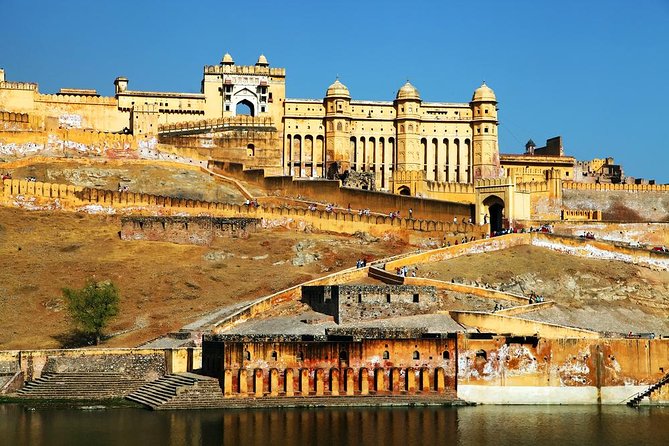
Jaipur is the capital of Rajasthan, one corner of India's Golden Triangle and a UNESCO World Heritage City. It is also our home. This list comes from years of showing the city to guests, so it includes the famous sights, the quieter places locals love, and the order that makes them easiest to see.
The forts
1. Amber Fort (Amer Fort)
Amber Fort is the reason many people come to Jaipur. It sits on a hillside 11 km north of the city, above Maota Lake, and its honey-coloured walls hide courtyards, gardens and royal apartments. Look for the painted Ganesh Pol gateway and the Sheesh Mahal, a hall whose walls and ceiling are covered in tiny mirrors that sparkle in candlelight.
Tip: arrive when it opens in the morning, before the heat and the tour groups. Walk up the old ramp or take a jeep; we do not recommend elephant rides.
2. Jaigarh Fort
Above Amber on the same ridge, Jaigarh was built to protect it. It is a military fort rather than a palace, with long ramparts, huge water tanks and Jaivana, one of the largest cannons on wheels ever built. The views over Amber and the hills are superb, and it is far quieter than its neighbour.
3. Nahargarh Fort
Nahargarh sits on the ridge directly above the old city and is the best place in Jaipur to watch the sun set. Inside, Madhavendra Bhawan has nine identical suites built for the king's queens, linked by hidden corridors. Stay for the view as the city lights come on below.
The old city
4. City Palace
In the heart of the Pink City, the City Palace is still home to Jaipur's royal family. Its museum displays royal costumes, weapons and two enormous silver urns, and the Pritam Niwas Chowk courtyard has four beautiful painted doorways, each representing a season. The palace is run by the royal family's trust and has its own ticket.
5. Hawa Mahal
The Palace of Winds, built in 1799, is Jaipur's most famous image: a pink sandstone facade with 953 small windows, designed so the royal women could watch street life and festivals without being seen. It is only one room deep. Tip: the best view is from the rooftop cafés across the road, early in the morning when the sun lights up the facade.
6. Jantar Mantar
Next to the City Palace stands an observatory of giant stone instruments, built in the early 18th century by Maharaja Sawai Jai Singh II, the founder of Jaipur. Its huge sundial can tell the time to within a few seconds. It is a UNESCO World Heritage Site, and much more interesting with a guide who can explain how each instrument works.
7. The bazaars
The old city was planned as a city of markets, and each still has its speciality:
- Johari Bazaar: jewellery, gemstones and silver.
- Bapu Bazaar: textiles, block-printed cotton and embroidered leather slippers (mojaris).
- Tripolia and Chandpol bazaars: brassware, bangles and everyday local life.
Bargaining is expected in the bazaars, though not in fixed-price shops.
Beyond the walls
8. Albert Hall Museum
Rajasthan's oldest museum is set in a grand Indo-Saracenic building in Ram Niwas Garden. Its collection ranges from miniature paintings and carpets to an Egyptian mummy. The building is beautifully lit at night.
9. Jal Mahal
The Water Palace seems to float in the middle of Man Sagar Lake, on the road to Amber. You cannot go inside, but it is lovely from the lakeside promenade, especially at dusk. It makes an easy photo stop on the way to or from Amber Fort.
10. Panna Meena ka Kund
This 16th-century stepwell near Amber Fort is a perfect geometric pattern of criss-crossing steps around a pool of water. Visitors are no longer allowed to walk on the steps, but you can photograph them from the edge. Go early for soft light and fewer people.
11. Patrika Gate
This vividly painted gateway at Jawahar Circle is one of the most photographed spots in modern Jaipur. Every arch and pillar is covered in colourful murals of Rajasthan. Go first thing in the morning for photos without crowds.
12. Galta Ji (the Monkey Temple)
Hidden in a gorge east of the city, Galta Ji is a group of temples built around natural springs and bathing tanks, home to hundreds of monkeys. Walk up to the small Sun Temple on the ridge above for a view over Jaipur at sunset.
13. Birla Mandir
A modern white marble temple to Lakshmi and Narayan at the foot of Moti Dungri hill. It is peaceful, beautifully lit in the evening, and a good introduction to a working Hindu temple.
Experiences
14. Block printing in Sanganer or Bagru
Jaipur is famous for hand block-printed textiles. In the nearby towns of Sanganer and Bagru, families have printed fabric by hand for generations, and you can watch them work and try it yourself. The Anokhi Museum of Hand Printing near Amber Fort explains the craft beautifully.
15. Food and a cultural evening
Try dal baati churma (Rajasthan's signature dish), a spicy pyaaz kachori for breakfast, and a thick lassi served in a clay cup. For an evening of folk dance, puppetry and a traditional Rajasthani dinner, a village-style cultural venue such as Chokhi Dhani on the edge of the city is popular with families. Our Rajasthani food guide lists more dishes to try.
A two-day Jaipur plan
| Morning | Afternoon | Evening | |
|---|---|---|---|
| Day 1 | Amber Fort at opening, Panna Meena ka Kund, photo stop at Jal Mahal | City Palace and Jantar Mantar | Sunset at Nahargarh Fort |
| Day 2 | Hawa Mahal from a rooftop café, Patrika Gate | Block printing in Sanganer or the bazaars | Albert Hall lit up, or a cultural dinner |
With a third day, add Jaigarh Fort, Galta Ji and slower time in the bazaars.
Practical tips
- Tickets: a composite ticket, valid for two days, covers several of the main monuments, including Amber Fort, Nahargarh, Hawa Mahal, Jantar Mantar and Albert Hall. The City Palace is ticketed separately. Prices for foreign visitors are higher than for Indian citizens.
- Guides: hire a licensed guide for Amber Fort, City Palace and Jantar Mantar. They bring the history to life and save you time.
- When to visit: October to March is the most comfortable. The Jaipur Literature Festival takes place every January.
- How long: two full days for the highlights, three to see the city properly.
- Getting around: the main sights are spread out, so a private car with a driver, or app-based taxis, will save a lot of time and energy.
Visit Jaipur with Orbit Trails
Jaipur is part of every one of our classic routes, including the 4-day Golden Triangle tour and Golden Triangle with Ranthambore. Planning a longer trip? See the best places to visit in Rajasthan and our complete Golden Triangle guide.
Want a local to plan your days in Jaipur? Tell us your dates in our trip planner, and our Jaipur team will send you a private, tailor-made itinerary within 24 hours.
Related Topics
Ready to Experience India? 🇮🇳
Let our expert team create a personalized tour package just for you. From the Golden Triangle to hidden gems across India.
Continue Reading
Discover more insights about traveling in India

12 Best Places to Visit in Jodhpur, the Blue City
The best places to visit in Jodhpur: Mehrangarh Fort, Jaswant Thada, the blue lanes of the old city, the clock tower market, Umaid Bhawan Palace and a Bishnoi village, with a two-day plan.

Jaisalmer Travel Guide: 10 Best Places to Visit and a Night in the Desert
Everything you need for Jaisalmer: the living Golden Fort, carved havelis, Gadisar Lake, the Sam and Khuri sand dunes, a desert camp night, the best time to go and how long to stay.

12 Best Things to Do in Varanasi, India's Holiest City
The best things to do in Varanasi: the evening Ganga Aarti, a sunrise boat ride on the Ganges, the ghats, Kashi Vishwanath Temple, Sarnath and the old city lanes, with etiquette tips and a two-day plan.